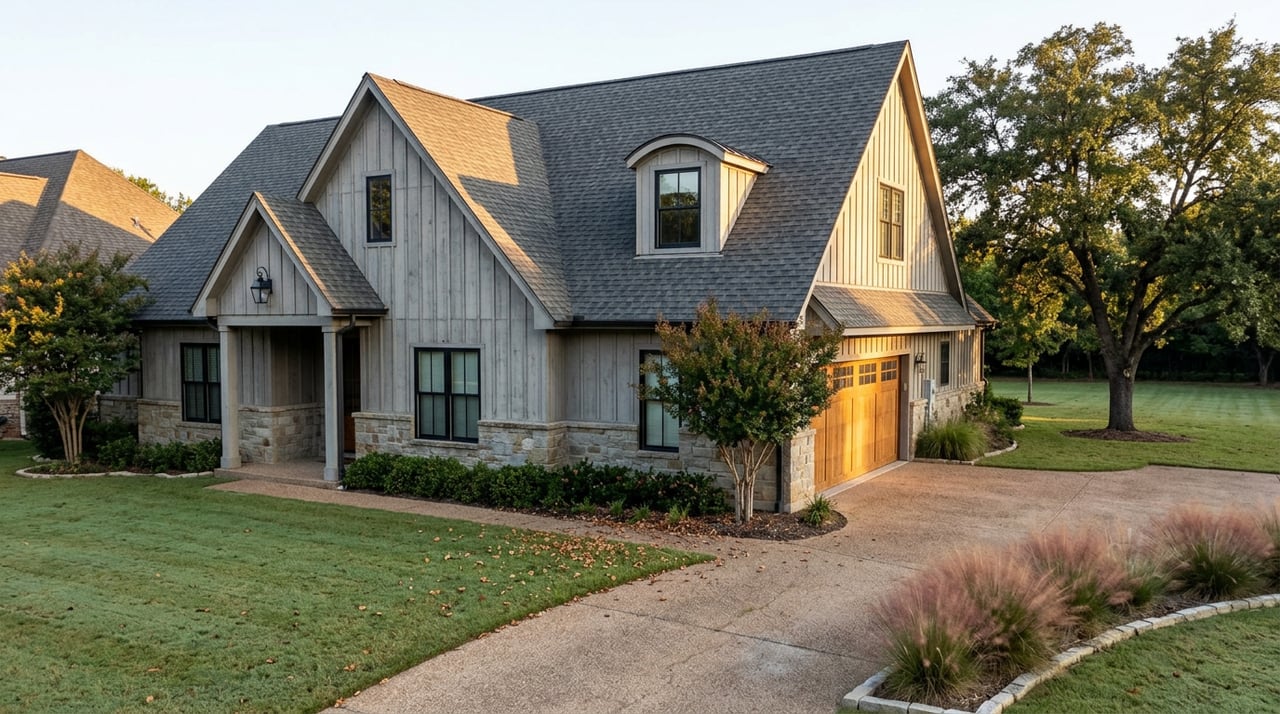
Saturday morning in Indian Lake usually starts the same way. Somebody's kid is already at the pool by the rec center on the north bank of Lake Arapaho before the coffee's finished brewing. A few neighbors walk the paths through the Recreation Preserve, past the tennis courts and the playground, before the heat sets in. It's the version of lake living the neighborhood was built to deliver, and most residents never look past it.
Ten minutes down the road sits something bigger. Millican Reserve has more than 30 miles of private trail through post oak savannah, creek beds, and open meadow, built for hiking, biking, running, and horseback riding. Access works differently: Indian Lake's HOA amenities are available through neighborhood dues, while Millican Reserve visitors use its pass or membership options.
The Water You Already Own
Lake Arapaho sits at the center of Indian Lake, and it functions the way a private amenity is supposed to: it's already paid for. Every home in the neighborhood carries HOA dues that run somewhere in the range of $70 to $116 a month depending on section, and that fee covers the rec center, the pool, the pavilion for events, and upkeep on the paths through the Recreation Preserve. You don't opt in. You bought a house here, so you're already a member of this system.
That's the part of the neighborhood's outdoor life that runs on autopilot. Nobody has to remember to renew anything to use the pool on a July afternoon or let the kids ride bikes down to the playground. The HOA structure handles it, and the result is a lake amenity that feels like it belongs to everyone who lives here, because it does.
The Trail System That Isn't Automatically Yours
Millican Reserve works on a completely different model, and it's easy to miss that distinction if you've only ever seen the name on a trailhead sign. The reserve is private property, not a public park, and access runs through the Millican Reserve Land Conservancy, a nonprofit that manages the land and its trail network. Being a homeowner in a neighboring community, including Indian Lake, doesn't put you on that list. You have to actively join.
The Conservancy sells three tiers of access: a single-day pass, an annual TrailPass, and a full Conservancy Membership, which also opens up member-only programming and discounts. Members and TrailPass holders are required to have their vehicle's make, model, and license plate on file before they park at the Farm Entrance on FM 2154, and anyone found using the trails without a pass is treated as a trespasser. The Conservancy manages the land and sets access requirements for visitors.
For people who ride, that structure is well known. The Brazos Valley Mountain Bike Association negotiates a discounted TrailPass for its members. Millican's biking trails include more than 20 miles of cross-country singletrack according to the trail-mapping site Trailforks and draw riders from across the area. For an occasional weekend hike somewhere other than the subdivision, visitors can use the single-day pass.
The Conservancy's calendar also includes free or low-cost entry points: guided nature walks that introduce newcomers to the land, and casual "Day at Play" Saturdays.
What Membership Actually Requires
If you're the kind of resident who's driven past the FM 2154 entrance and wondered what it would take to get in, the tiers break down like this:
- DayPass – single-visit access, no long-term commitment, aimed at first-timers
- TrailPass – annual pass for hikers, runners, and cyclists who want repeat access without full membership
- Conservancy Membership – full access plus invitations to member-only events and program discounts, and the tier homeowners inside Millican itself typically hold
None of these are automatic. Each one requires paperwork on file with the Conservancy, including that vehicle registration detail, before you're allowed past the Farm Gate. It's a small piece of friction, but it's the exact piece of friction that separates a resident who's aware of the reserve from a resident who's actually used it.
The Calendar Indian Lake Actually Runs On
Inside Indian Lake, the neighborhood's own association runs seasonal gatherings for Halloween, Easter, and Christmas, the kind of HOA-sponsored events that don't require a separate membership decision because the dues already cover them. The Indian Lakes Association backs this up with its own newsletter, publishing seasonal updates through at least the winter 2026 issue, evidence that this is an actively run community calendar.
Fall is when that calendar starts to overlap with something else nearby. About a mile up Highway 6 sits Santa's Wonderland, which markets itself as the world's largest Christmas park, with light displays, snow tubing, and live entertainment that draws visitors from well outside Brazos County each holiday season. Indian Lake residents don't have to plan a trip. It's a five-minute drive from the neighborhood gate, and by the time the HOA's own Christmas gathering rolls around, plenty of families have already made at least one run up the highway for the lights.
Dinner out usually means one of two names residents mention consistently: RX Pizza and Bar, the second location of a downtown Bryan staple, or Casa do Brasil, known locally for steak, seafood, and an extensive salad bar. Neither requires a drive into central College Station. Both sit close enough to fold into a normal week without much planning.
Outdoor Amenities and Access Options
Residents get a private lake, a rec center, walking paths, and a full HOA events calendar, because dues cover all of it. Ten minutes away sits a trail system more than ten times the size of anything inside the neighborhood, with visitors choosing a DayPass, TrailPass, or Conservancy Membership.
Those options let visitors choose between a single visit and ongoing access, while keeping the reserve separate from Indian Lake's HOA amenities.
If you're weighing what a neighborhood like Indian Lake actually offers day to day, versus what shows up in a listing description, that's the kind of detail only somebody paying close attention to Brazos County catches. The Maurey Bell Group works this market street by street, from the HOA fine print to the trail systems next door, and can walk you through exactly what ownership here does and doesn't include. Request a free home valuation and property management quote to start that conversation.
This article is general information, not legal, tax or financial advice. Consult a qualified professional about your situation.