What happens to a neighborhood's investment math when the rule that shaped it for 85 years disappears in a single legislative session?
That question stopped being hypothetical in Southside Historic District last fall. For generations, anyone buying a rental property south of Texas A&M's campus built their pro forma around a hard ceiling: no more than four unrelated tenants per home. That ceiling is gone statewide as of September 2025. But Southside didn't get simpler to underwrite because of it. It became more obviously two different places sharing one name, and the line between them was never about how many roommates you could stack into a house.
The Number Every Southside Buyer Learned First
Since 1939, College Station has capped the number of unrelated people who can share a single-family home at four. For most of that span, enforcement stayed light. That changed as Texas A&M's enrollment climbed past 70,000 and groups of five or six students started renting homes built for smaller families, prompting the city to add a civil penalty track in 2024 alongside the older misdemeanor charge to make the rule easier to enforce.
Southside carried a second threat on top of the citywide cap. City rules let a majority of homeowners in a subdivision petition for a Restricted Occupancy Overlay, or ROO, which drops the limit further to two unrelated residents. By late 2023, reporting from The Battalion described a group tied to the Occupancy Enforcement Alliance actively organizing to bring a two-person ROO specifically to Southside Historic District, the same neighborhood that already carries one of the city's only two Neighborhood Conservation Overlays. Former councilwoman Elianor Vessali argued publicly that the push had less to do with overcrowding than with residents not wanting students as neighbors. Whichever motive was accurate, an investor evaluating a Southside purchase in 2023 or 2024 had to price in a real chance of losing half the bedrooms in a four-bedroom rental to a future overlay vote.
Then the State Legislature Made the Question Moot
Senate Bill 1567 rewrote that calculus for the whole state, not just Southside. Governor Abbott signed it in June 2025, and it took effect September 1, 2025. The bill bars home-rule cities that host a university and have a population under 250,000 from limiting occupancy based on relationship, age, or occupation. Cities can still write standards tied to health and safety, so square footage requirements under the International Building Code remain fair game, but they can no longer ask who is related to whom or review a lease to count heads. College Station's no-more-than-four ordinance, and any Southside ROO that might have followed it, lost their legal foundation overnight.
Trade press covering the change described a market still catching up to it. As of a mid-September 2025 account, no permits for the denser student housing this bill now allows had been approved yet in the neighborhoods that used to be restricted. That gap between what's newly legal and what's actually been built is the window a Southside buyer is looking at right now.
The Overlay SB 1567 Never Touched
Here is the part that changes the thesis rather than simplifying it. Southside's Neighborhood Conservation Overlay, approved by City Council in February 2019, covers roughly 127 acres inside what locals call the Heart of Southside, specifically the College Park, South Oakwood, and Dulaney subdivisions along with parts of Woodson Village Phases 1 and 2. City planning staff deliberately kept the NCO's rules limited to physical characteristics: tree preservation, lot size, and building height. When residents asked to fold an occupancy restriction into that same overlay during its 2019 development, staff pushed back and kept the two issues on separate tracks.
That decision from 2019 matters more today than it did then. SB 1567 preempted occupancy rules statewide but left tree and lot standards completely alone. A century-old live oak inside the NCO boundary still can't be cleared for construction outside the buildable footprint. A house on the same street but outside that roughly 127-acre boundary faces no such limit, and now faces no occupancy limit either.
Two Southsides, Same Name, Different Rules
| Inside the 2019 NCO (College Park, South Oakwood, Dulaney, Woodson Village Ph. 1-2) | Outside the NCO boundary | |
|---|---|---|
| Occupancy cap | None, per SB 1567 (Sept. 2025) | None, per SB 1567 (Sept. 2025) |
| Mature tree removal | Restricted outside the buildable area | Governed only by standard permitting |
| Lot size and building height | Fixed by the 2019 overlay | Set by underlying zoning, more room to build up or out |
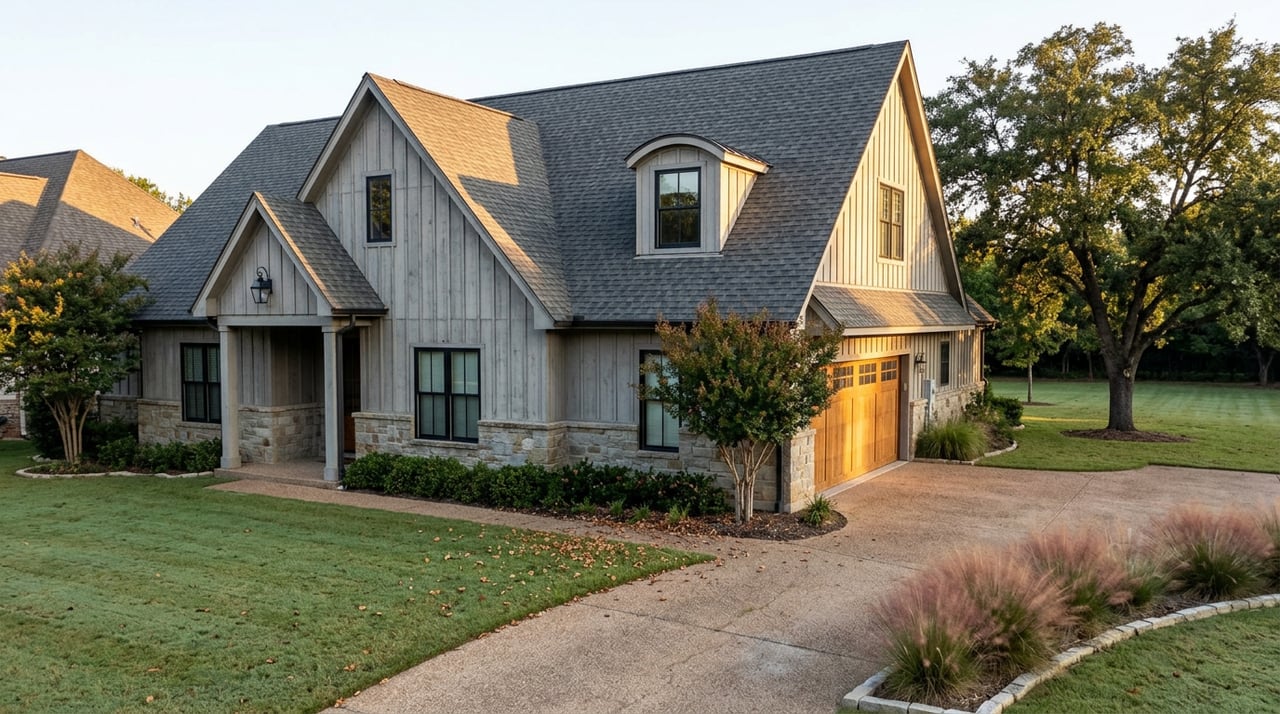
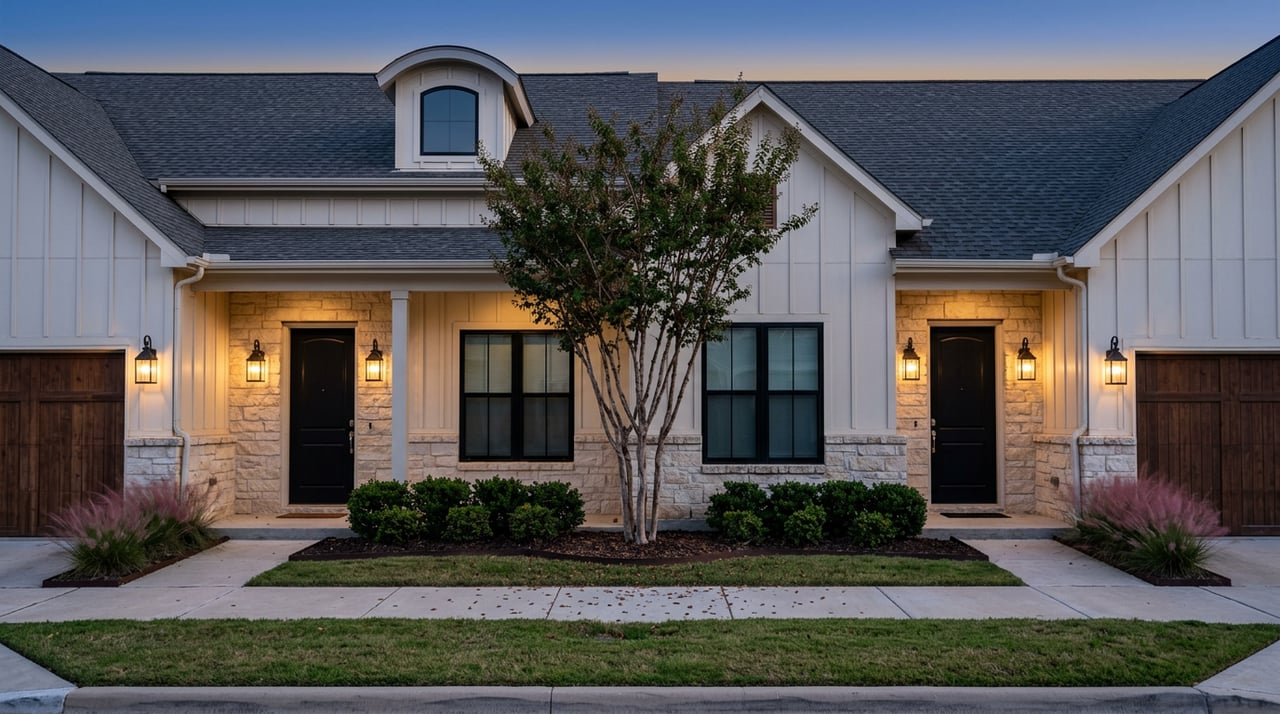
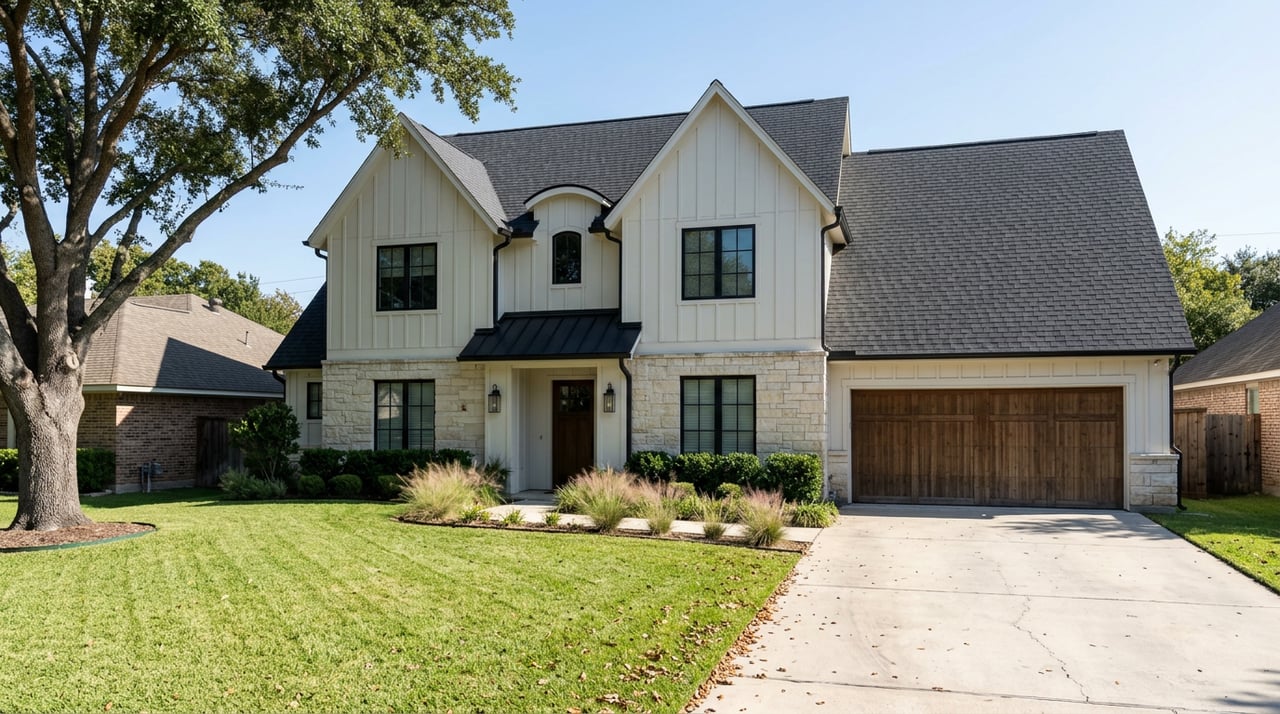
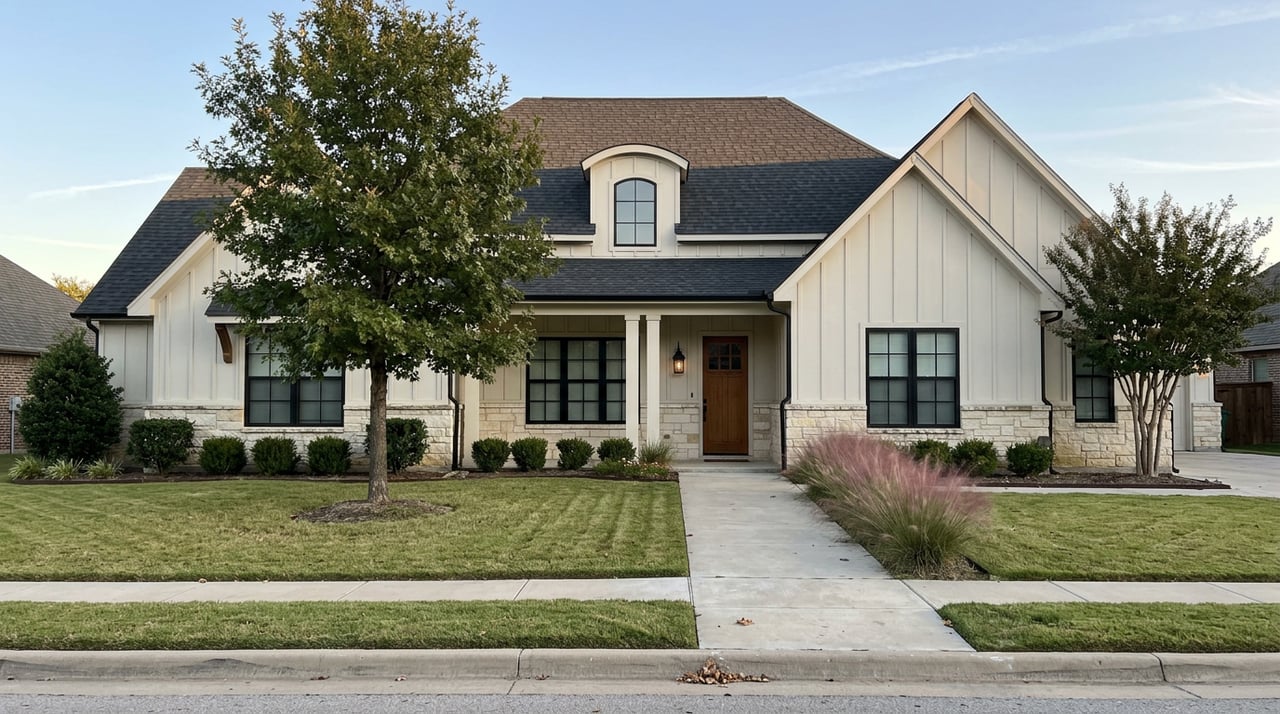
| Typical product | Century-old campus homes, moved-and-restored houses | Newer construction, larger student-oriented floor plans |
A buyer looking at two comparable four-bedroom listings, one on each side of that line, is actually pricing two different businesses. One is a renovation play with a hard cap on how much bigger it can ever get. The other is a build play that just lost its last real constraint.
The Teardown Math That's Been Running for Years
This split isn't new. It's about to get more consequential. Many of Southside's oldest homes started life on the Texas A&M campus, including a cluster built there between 1891 and 1918 to house faculty and administrators, then physically moved into the neighborhood between the early 1940s and 1972 when the university stopped providing campus housing. That history is why the district marked its 100th anniversary in June 2023 with a proclamation from Mayor John Nichols, and why a centennial home tour the following spring walked visitors past houses carrying plaques for the department head or Corps commandant who once lived there.
It's also why the neighborhood has spent years losing ground to teardowns. Rising land values pushed up property taxes on longtime owners, and some sold to buyers from outside the area who found it cheaper to demolish an aging house and build a larger one for student tenants than to restore what was there. Inside the NCO, that trade-off is still capped by tree and height rules that survived the state's preemption. Outside it, with the occupancy ceiling now gone too, the math on tearing down an older home for a bigger footprint just improved noticeably.
What This Means for Pricing a Southside Deal
Southside spans a genuinely wide price band, and that band was already splitting along subdivision lines before any of this occupancy news broke. Ranch-style homes on the neighborhood's southern edge have traded in the low $200,000s to mid $300,000s. Historic homes closer to Kyle Field and inside the older subdivisions commonly start near $900,000 and have sold for several million, with lot value alone regularly running past $300,000 in the highest-demand blocks. On the rental side, four-bedroom, four-and-a-half bath homes marketed to student tenants are commonly leasing in the $3,000 to $3,850 monthly range as of 2026 listing activity near campus.
None of those figures tell you which regulatory track a specific address sits on, and that's the due diligence step worth doing before an offer goes in. Pulling the city's zoning overlay map for an exact address takes a few minutes and tells you whether you're buying a capped historic asset or a flexible one, which matters more to your five-year return than the listing price alone.
FAQ
Does the Neighborhood Conservation Overlay cover the whole neighborhood people call Southside? No. The 2019 overlay follows specific subdivision boundaries, College Park, South Oakwood, Dulaney, and parts of Woodson Village Phases 1 and 2, rather than the informal "Southside" name locals use. Two homes a block apart can sit on opposite sides of the line.
Can a landlord still be fined for overcrowding in Southside? Only under health and safety standards tied to square footage. Senate Bill 1567 removed the city's ability to restrict occupancy based on who is related to whom, effective September 2025.
Is a teardown near the NCO boundary off the table? Not automatically, but construction inside the overlay has to work around protected trees and stay under fixed height and lot standards. Outside the boundary, those specific constraints don't apply.
If you're weighing a Southside purchase against another Brazos Valley rental submarket, the subdivision line matters as much as the listing price. Maurey Bell Group can tell you which side of the overlay a specific address sits on, what it can still become under current rules, and what it should rent for today. Request a Free Home Valuation and Property Management Quote to get numbers specific to your address.